|
Click here for an Introduction to Third Angle Orthographic Drawing Click here for Third Angle Orthographic Drawing - an Example |
|
|
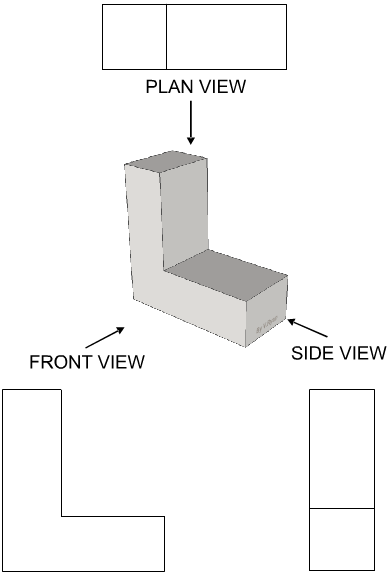
Orthographic Projection is a way of drawing an object from different directions. Usually a front, side and plan view are drawn so that a person looking at the drawing can see all the important sides. Orthographic drawings are useful especially when a design has been developed to a stage whereby it is almost ready to manufacture. IMPORTANT: There are two ways of drawing in orthographic - First Angle and Third Angle. They differ only in the position of the plan, front and side views. Below is an example of third angle projection. |
|
|
An L-shaped object. The Plan View of the L-shape is drawn as a 'birds eye' view, a view from above. The Front View is drawn as if stood in front of the L-shape. The Side View is drawn as if stood at the side. |
|
 |
|
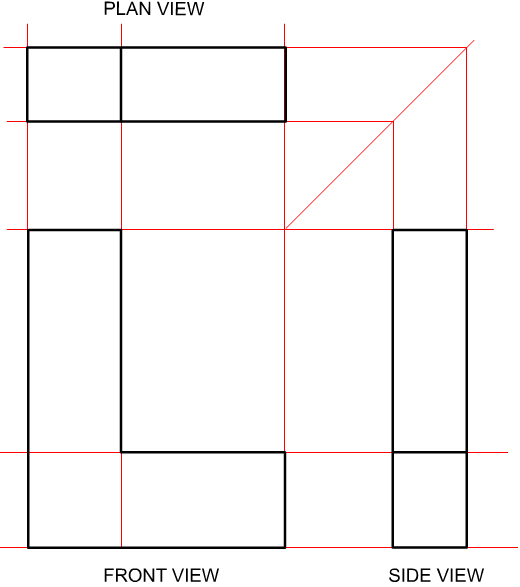
| The correct position of each view is shown below. They have been drawn very accurately, using T-Squares and set squares. | |
 |
|
|
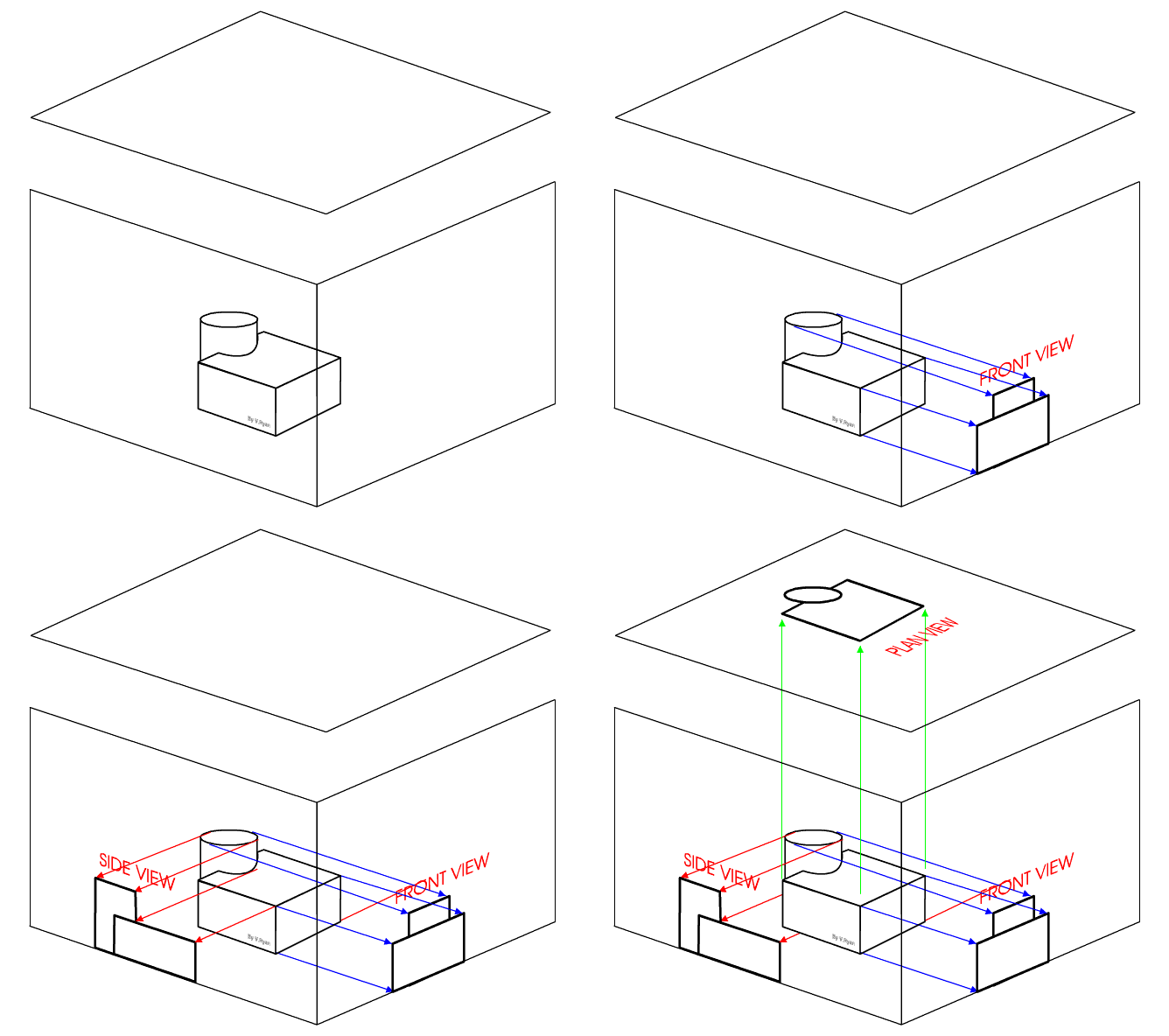
Another example of third angle orthographic projection is shown below. Follow the blue, red and green guidelines as the front, side and plan view are constructed. |
|
| PDF FILE - CLICK HERE FOR PRINTABLE FILE BASED ON EXERCISE BELOW | |
|
|
|
|
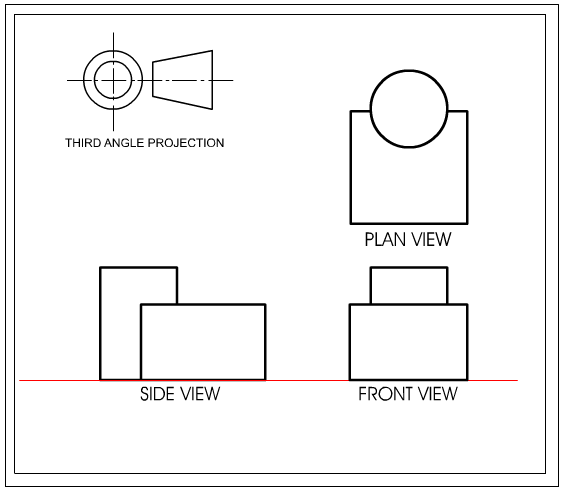
The final arrangement of the views are shown in the drawing below. Notice how the symbol for third angle orthographic projection has been added and the paper has a title block and borderline. |
|
|
|
|
|
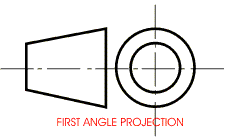
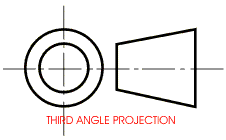
Carefully study the symbols shown below. Normally when drawing in first or third angle projection a symbol is drawn which clearly shows which angle of projection has been used. |
|
|
|
|
|
|
|