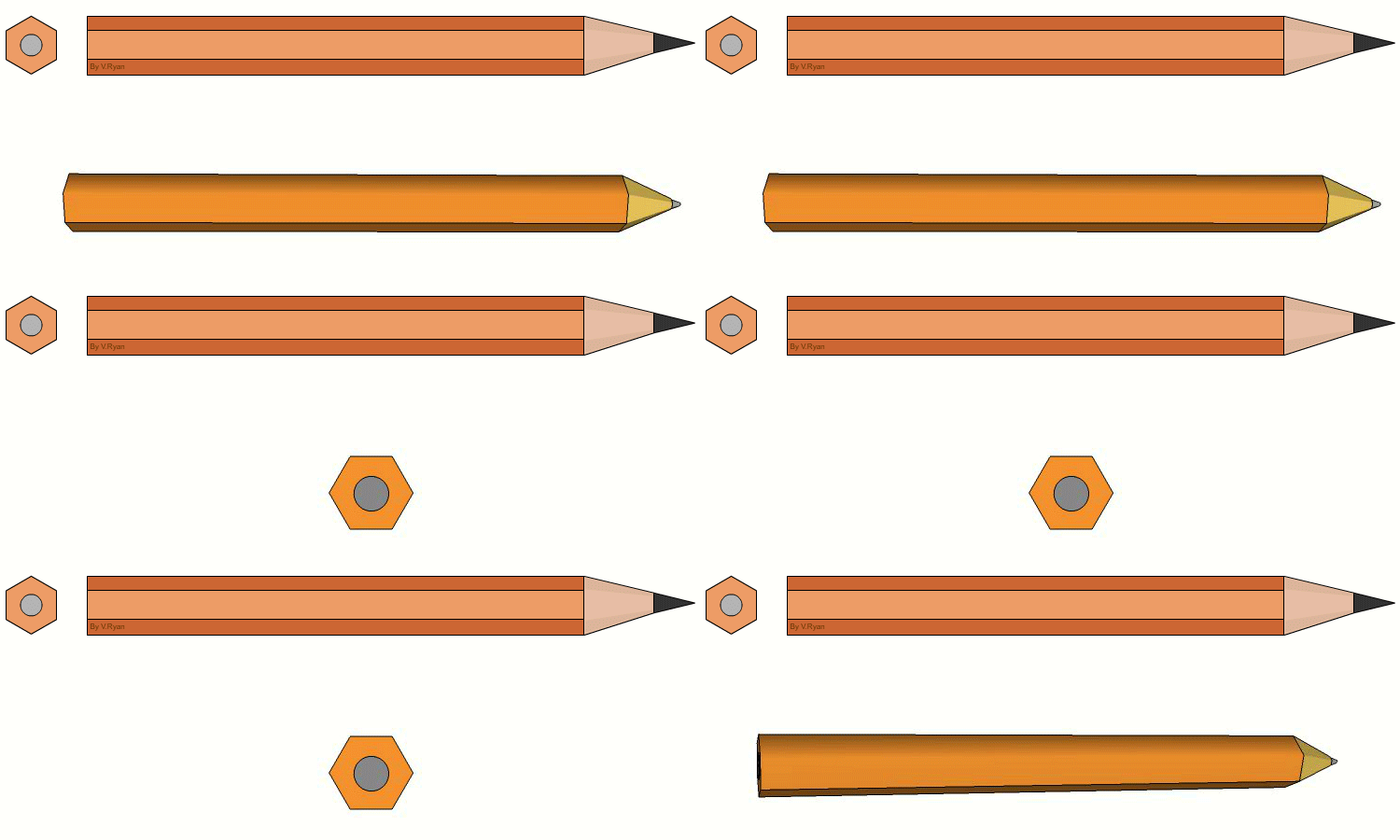
| A typical pencil is seen below.
It has an hexagonal section (six sides) and as been sharpened exposing the
lead/graphite, ready for use. |
 |
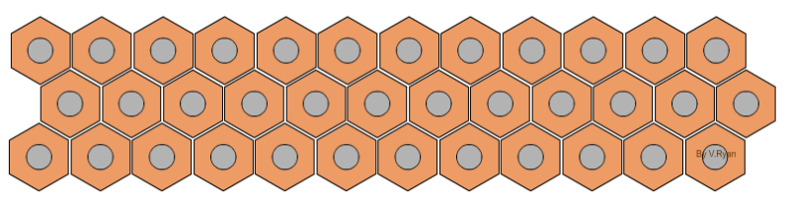
| The hexagonal shape has been selected for a
very good reason. It allows the pencils to be stacked/ stored tightly
together. |
 |
|
|
| |
| A hexagon is a very good
example of a tessellation. A tessellation is a shape that is repeated over
and over again without creating gaps or spaces. Tessellation is sometimes
called ‘tiling’. |
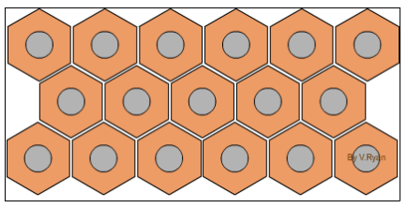 |
The
hexagonal pencils have been placed inside a rectangular box. This creates
some empty spaces but the pencils can still be regarded as efficiently
packed. |
| |
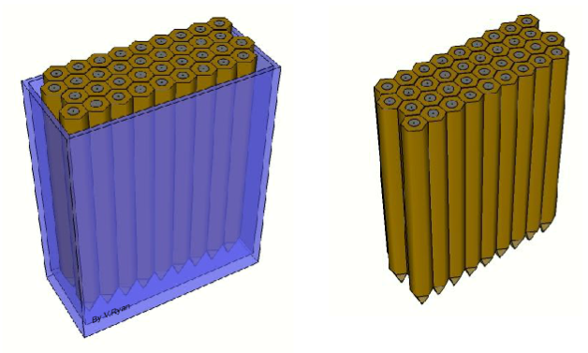
| The 3D illustrations clearly show how the
pencils have been arranged inside the box/package to reduce empty space. |
 |
| This shape has been chosen for
the pencils so that they can be packaged and then transported efficiently.
The shape ensures that packaging is kept to a minimum and that transport
costs are also kept to a minimum. |
| |
| CLICK HERE FOR NEXT
TESSELLATIONS PAGE |
| |
|
|
| |
|
CLICK HERE FOR GRAPHICS INDEX PAGE |
| |
|